Column · @shaneysyn208
Peptide Purity: 98% Vs 99% Hplc Described
·Filed by @shaneysyn208
Just How Are Peptides Checked? Hplc, Coa & Pureness Described 2026 For lots of researchers, HPLC information acts as one of the primary quality signs assessed throughout distributor examination. Organizations buying wholesale research peptides commonly review pureness documents prior to positioning larger orders. " Study Use Just" (RUO) is a category showing that an item is planned solely for research laboratory study and experimental examination. Peptide pureness refers to the percentage of the target peptide existing in an example, determined using High-Performance Fluid Chromatography (HPLC). Study peptides are manufactured variations of naturally taking place peptides, manufactured to specific requirements for usage in clinical studies. The UK peptide market goes through strict regulations to ensure consumer security.
What To Search For When Buying Study Peptides In The Uk
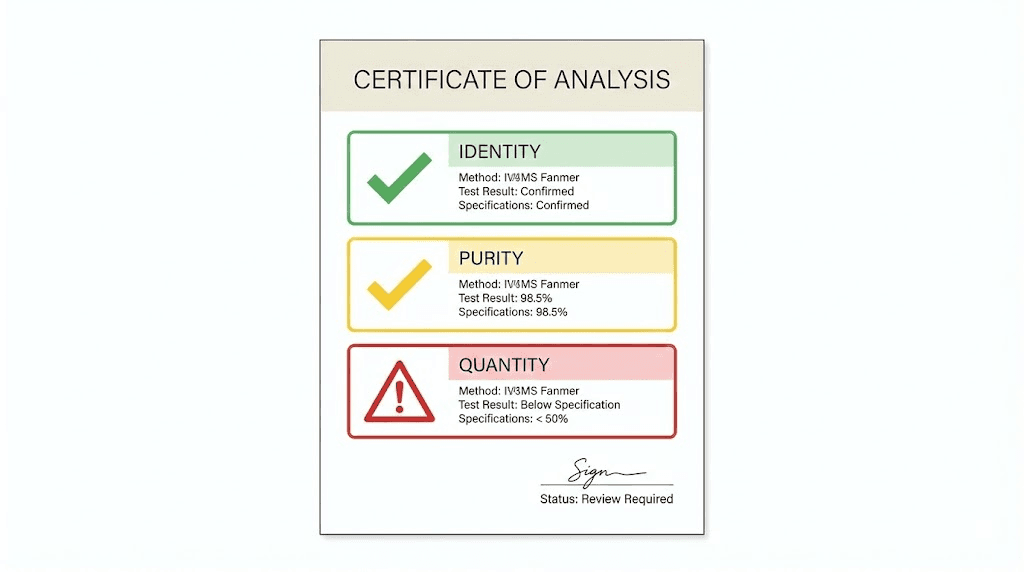
Authentic research peptides include a Certification of Evaluation showing HPLC pureness screening and mass spectrometry results from an independent research laboratory. You can verify credibility by examining the COA verification code with the screening laboratory's web site. Normal purity degrees range in between 99.0% and 99.7%, lining up with worldwide laboratory study standards. These tests confirm that peptides from Peptides Laboratory UK have no contaminants, destruction spin-offs, or undesirable fillers-- just verified, high-purity research material. Natural peptide synthesis starts with the transcription of DNA right into carrier RNA (mRNA). After that, ribosomes read the mRNA and cause amino acids to fuse in a polypeptide chain, adhering to a series with desired physiological effects.Just how to select the very best peptide?
Before diving into peptide therapies, it''s important to plainly define your health and health goals. Are you intending to drop weight, improve muscle recovery, invigorate your skin, or just enhance your overall power levels? By determining your requirements, you can concentrate on peptides that a lot of successfully target those areas.
- The peptide purity is quantified by the peak area of the final purified peptide represents the location of the primary height in regard to the overall area of all peaks detected within the chromatogram.
- Initially researched for Alzheimer's treatment, now made use of for improved memory, learning, and psychological clarity.
- That's why 99%+ pureness is not just an advertising and marketing buzzword-- it's an essential requirement for accomplishing reputable, reproducible, and meaningful outcomes.
Impact Of Temperature On Rp-hplc Of Random Coil Vs Α-helical Peptides
An absence of chromatogram does not revoke the outcomes, rather it is a function of how they offer outcomes to customers. Nevertheless, as an ideal practice we suggest asking a brand-new tester for the chromatogram file to guarantee it matches what they have provided in the test outcome. Peptide bonds take in light strongly in the much ultraviolet (UV) (220 nm), giving a hassle-free ways of discovery (usually at 210-- 220 nm). Additionally, the fragrant side-chains of tyrosine, Research Peptide COA phenylalanine and tryptophan absorb light in the 250-- 290 nm UV variety; it needs to be kept in mind, nonetheless, that these aromatic residues are absent in all peptides. These impurities are structurally similar to the target compound and elute close to it on a reverse-phase column, making them hard to totally eliminate by preparative HPLC. Their biological activity is typically missing or significantly decreased contrasted to the undamaged series, due to the fact that the missing out on deposits usually contribute to the active conformation or binding pharmacophore. RP-HPLC stays the most extensively used mode of HPLC for peptide splittings up (1-- 8). It is typically superior to various other HPLC modes in both rate and performance. William is a research expert at Peptides Lab UK, specialising in study peptides, research laboratory compounds, and sourcing standards for high-purity peptide items. Furthermore, we can give amino acid evaluation (AAA) to establish the amino acid composition in a peptide or protein item, which makes sure experimental accuracy and consistency. The chromatogram created by reversed stage HPLC can be utilized for the resolution of the peptide purity. The peptide purity is measured by the peak area of the final detoxified peptide represents the area of the main peak in regard to the overall location of all peaks spotted within the chromatogram. And we can obtain the number and family member quantities of feasible spin-offs through determining the height areas. Furthermore, synthetic peptides also provide an economical option to standard drugs. Numerous on the internet peptide suppliers do not provide Certificates of Evaluation, and others use COAs without independent verification. Only providers making use of third-party research laboratory testing supply dependable quality documents. Batch-specific testing means that every production run undergoes independent evaluation rather than counting on historical testing from previous batches. Each set obtains a distinct identifier that links it to specific COA outcomes. The logical chromatogram, not simply the purity percent, is consisted of in the Certification of Evaluation for every single set. This permits researchers to examine the top profile directly instead of accepting a single number without context. The most common synthesis contaminations are truncated peptides, series that terminated prematurely throughout chain setting up and deletion sequences, which are missing one or more internal amino acids because of insufficient coupling at a specific action.— 30 —